No.1BEST OVERALL
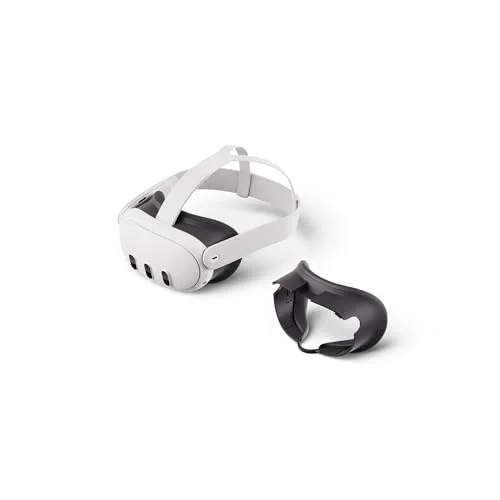
Meta Quest 3 (512GB) Standalone VR Headset
★★★★½ 4.6
Visuals
Comfort
Value
DisplayDual LCD, 2064 x 2208 per eye
TrackingStandalone (inside-out, 6DoF)
Field of viewAround 110 degrees
VR has finally grown up. The best headsets no longer need a gaming PC or a tangle of wires, and the games are genuinely good. We tested six current headsets side by side and tell you honestly which one suits your space, your games and your budget, and where each one falls short.
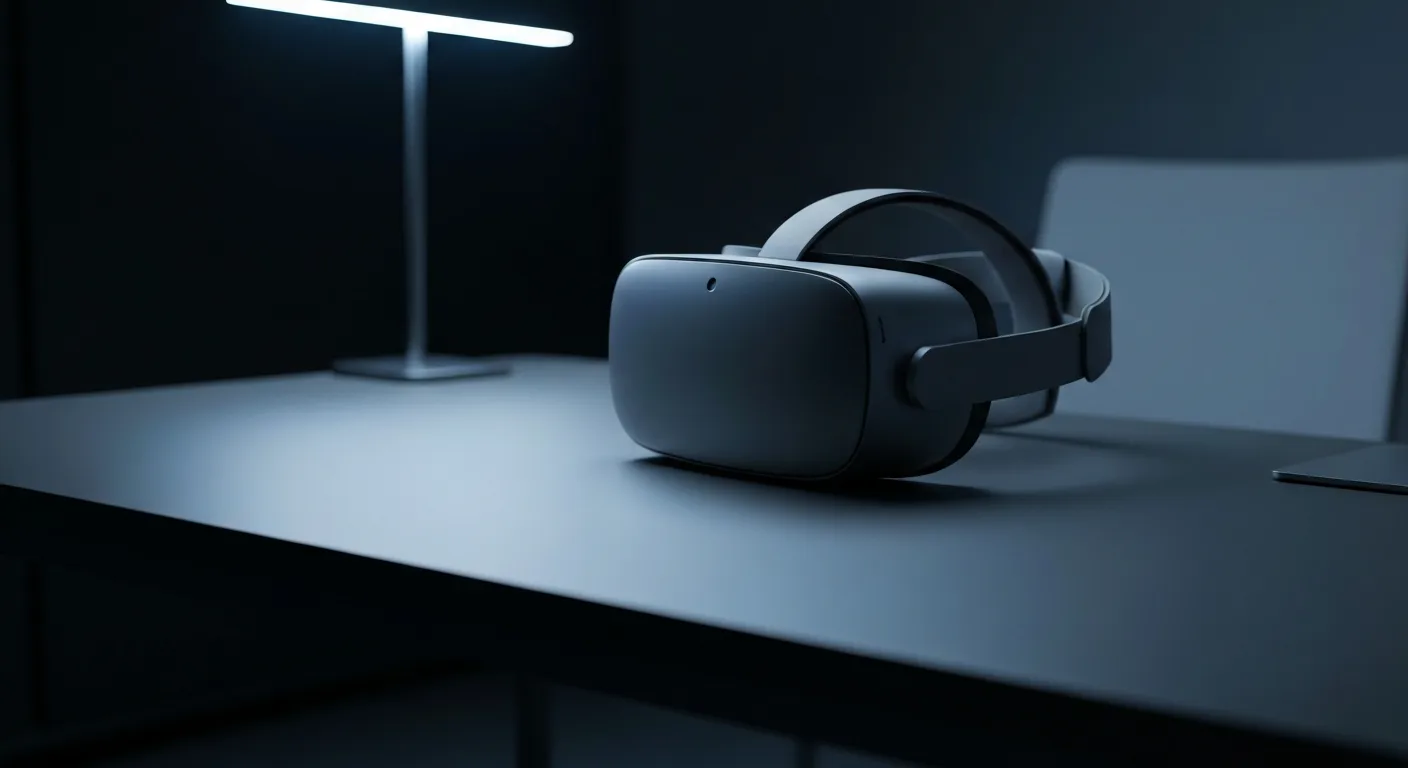 FIG. 01: THE TEST BENCH
 The short version: our best overall pick is the Meta Quest 3, a standalone headset that needs no PC, has sharp pancake lenses and the largest game library in VR. For a tighter budget the Meta Quest 3S plays the exact same games for noticeably less, which makes it the best first headset. If you own a PS5, the PlayStation VR2 has the best image here thanks to its OLED display. More important than the brand, though, is settling one question first: do you want a convenient standalone headset or a PC-tethered one?
| # | Model | Display | Tracking | Field of view | Score | Price | |
|---|---|---|---|---|---|---|---|
| 1 | Meta Quest 3 (512GB) Standalone VR Headset BEST OVERALL | Dual LCD, 2064 x 2208 per eye | Standalone (inside-out, 6DoF) | Around 110 degrees | 4.6 | £501.99 | View |
| 2 | Meta Quest 3S (256GB) Standalone VR Headset BEST BUDGET | Dual LCD, 1832 x 1920 per eye | Standalone (inside-out, 6DoF) | Around 96 degrees | 4.4 | £403.49 | View |
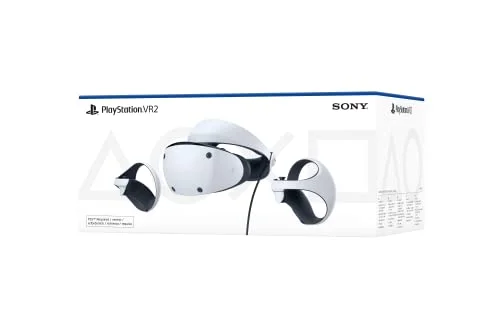
| 3 | Sony PlayStation VR2 Headset BEST FOR PS5 | Dual OLED, 2000 x 2040 per eye | Tethered to PS5 (inside-out, 6DoF) | Around 110 degrees | 4.3 | £449.00 | View |
| 4 | Pico 4 Ultra Standalone VR Headset BEST BALANCED STANDALONE | Dual LCD, 2160 x 2160 per eye | Standalone (inside-out, 6DoF) | Around 105 degrees | 4.2 | £504.40 | View |
| 5 | HTC Vive XR Elite Convertible VR Headset PREMIUM PICK | Dual LCD, 1920 x 1920 per eye | Standalone or PC-tethered (6DoF) | Around 110 degrees | 4.0 | £1,021.67 | View |
| 6 | Valve Index VR Kit (PC VR Headset) BEST FOR PC ENTHUSIASTS | Dual LCD, 1440 x 1600 per eye | External base stations (room-scale 6DoF) | Around 130 degrees | 4.1 | £849.00 | View |
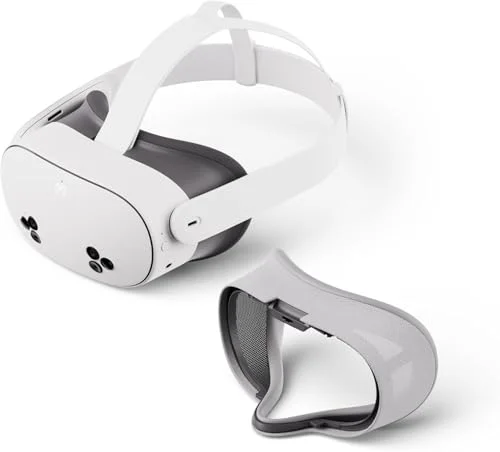
A VR headset is the most immersive way to play games, watch films on a giant virtual screen or work out without leaving the house. For most people that means a standalone headset: a self-contained computer you strap to your face, with no PC, no console and no wires needed to get going. You draw a safe boundary on your floor, pull the headset on and you are inside the game. That convenience is the single biggest reason VR has gone mainstream, and it is why our top picks are standalone models.
It is only fair to be honest about the trade-offs too. VR asks more of you than a flat-screen game: you need a bit of clear space, the headsets are heavier on your face than a pair of glasses, and the battery on a standalone unit typically lasts two to three hours before it needs charging. Some people feel queasy at first, especially in games with fast artificial movement, though most adjust within a week or two. None of this is a dealbreaker for the right buyer, but if you want a passive, sit-back experience with zero setup, VR is not it. For everyone else, the payoff in immersion is hard to beat.
This is the choice that decides which headset is right for you, and it matters far more than any single spec. Standalone headsets, such as the Meta Quest 3, the Quest 3S and the Pico 4 Ultra, have the computer built in. They run hundreds of games on their own, set up in minutes and you can carry them to a friend's house. For the overwhelming majority of buyers, this is the right answer.
PC VR and console VR headsets, such as the Valve Index and the PlayStation VR2, push processing onto a powerful gaming PC or a PS5. That unlocks the most demanding graphics and the best simulation titles, but it ties you to a desk, a cable and a much higher total cost once you account for the hardware to drive it. Helpfully, the line is blurring: standalone headsets such as the Quest 3 can also link to a gaming PC over a cable or wirelessly, so you can start standalone and add PC VR later. We walk through the full comparison in our guide to standalone versus PC VR.
Spec sheets throw a lot of numbers at you, but only a few of them change how the headset feels in use. Lenses matter more than raw resolution: the modern pancake lenses on the Quest 3 and Pico 4 Ultra give a much larger clear "sweet spot" than the older Fresnel lenses found on cheaper models, so the image stays crisp across more of your view. Resolution still counts, and the headsets here sit around 2000 pixels per eye or more, which is sharp enough to read text comfortably. Refresh rate affects both smoothness and comfort: 90Hz is the sensible floor, while enthusiast headsets such as the Valve Index push to 144Hz for noticeably smoother motion in fast games.
Then there is comfort, which is easy to overlook in a shop but decides whether you actually use the thing. Weight, balance and how the strap spreads pressure all matter, and a rear-mounted battery, as on the Pico 4 Ultra, helps a lot on longer sessions. Finally, the ecosystem is half the purchase: the Meta store has by far the largest library, which is a big reason the Quest models top our list, while the PlayStation VR2 trades library size for a smaller set of excellent, polished exclusives. Our full buying guide covers the rest, from tracking and controllers to the features that are genuinely worth paying for.
If you are buying your first headset, start with the standalone models, and the choice largely comes down to budget. The Meta Quest 3 is the all-rounder we recommend to most people: its pancake lenses are the sharpest of the Quest family, the full-colour passthrough makes mixed-reality apps genuinely useful, and it runs the entire Quest library. Spend a little less and the Quest 3S gives you the same processor and the same games with slightly older lenses, which is the smartest way to get a newcomer or a child into VR. If you would rather have the most comfortable standalone headset for long sessions, the Pico 4 Ultra is worth a look, provided the games you want are on its smaller store. Beginners can find a clear starting point in our guide to the best VR headset for beginners.
If you already own the right hardware, two headsets stand out. PS5 owners should look first at the PlayStation VR2: its OLED panels give the best blacks and HDR in this group, and the eye tracking plus headset haptics make its best games feel uncannily present. The catch is that it only works plugged into a PS5, so it is a poor choice if you do not have the console. We cover the options in full in our guide to the best VR headset for PS5. For committed PC players, the Valve Index remains a favourite despite its age, thanks to a 144Hz refresh, a very wide field of view and the best finger-tracking controllers in VR, though it demands a powerful PC and a mounted base-station setup. The convertible HTC Vive XR Elite sits between the two worlds, running standalone or tethered, for buyers who specifically want that flexibility.
We deliberately picked headsets that cover the full range of real buyers rather than six near-identical standalone boxes. There is an everyday all-rounder, a budget entry point, a console headset, a comfort-focused standalone, a convertible premium option and an enthusiast PC kit. Every model here is genuinely available and supported in the UK, and each one earns its place for a specific buyer, with no padding. Work out your setup first, whether that is "no PC", "I have a PS5" or "I have a gaming PC", and you will find your headset on this list. To see exactly how we score them, read our how we test page.
For most people the Meta Quest 3 is the soundest choice: it needs no PC, the lenses are sharp, the passthrough is excellent and the game library is the biggest in VR. If money is tight, the Quest 3S plays the same games for less and is the best first headset, while the Pico 4 Ultra is the comfort pick for long sessions. PS5 owners should buy the PlayStation VR2 for its OLED visuals, and dedicated PC players the Valve Index. Whichever you choose, the most important step never changes: decide between a standalone or PC headset first, then pick within that group. Get that right and any of these headsets will serve you well.
Our best overall pick is the Meta Quest 3: it runs games on its own with no PC or wires, has sharp pancake lenses and the largest game library in VR. For a tighter budget the Meta Quest 3S plays the same games for less, and PS5 owners should look at the PlayStation VR2 for its excellent OLED display.
Not any more. Standalone headsets such as the Meta Quest 3, Quest 3S and Pico 4 Ultra have the computer built in and run games on their own with no PC, phone or wires. You only need a powerful gaming PC for tethered headsets such as the Valve Index, and a PS5 for the PlayStation VR2.
The Meta Quest 3S is the easiest and most affordable way into VR. It runs the full Quest game library, needs no PC and sets up in minutes. If you want the sharpest image and have a little more to spend, step up to the Meta Quest 3.
You can get into modern standalone VR for around the price of the Meta Quest 3S, while the Meta Quest 3 sits a step above for sharper lenses. Premium and PC-tethered headsets such as the HTC Vive XR Elite and Valve Index cost considerably more and only make sense for enthusiasts with the right setup.
Some people do, especially at first or in games with artificial movement. A higher refresh rate, good tracking and snap-turn comfort settings all help. Start with short sessions in seated or teleport-movement games, and most players adjust within a week or two.