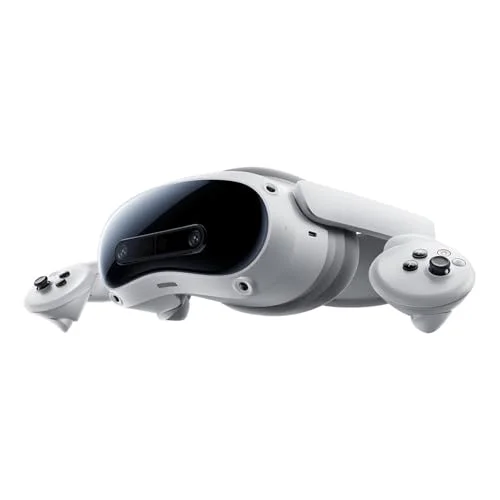
The Pico 4 Ultra is the strongest alternative to Meta's Quest range, and in one respect it beats them: comfort. By moving the battery to the back of the strap, it counterbalances the screens at the front, so the headset sits more evenly on your face. The hardware is genuinely good. The honest catch, as ever with a non-Meta headset, is the smaller game store.
Who is the Pico 4 Ultra for?
The Pico 4 Ultra is the right headset if comfort over long sessions is your priority and the games you want are available on its store. It is a standalone unit, so no PC is needed, and its balanced design makes it one of the few headsets you can wear past the hour mark without the familiar front-heavy ache. For sim, fitness or film fans who stay in the headset a while, that comfort advantage is real and worth having.
It is the wrong headset if you want the absolute largest library with zero compromises, where the Meta Quest 3 remains the safer choice, or if you want guaranteed, easy UK availability and support, which is more consistent for the Quest range. The Pico rewards buyers who do a little homework first and prioritise the wearing experience.
How the Pico 4 Ultra performs
Comfort and design
This is the headset's standout quality. The rear-mounted battery is not just extra capacity, it acts as a counterweight, so the centre of gravity sits closer to the middle of your head rather than pulling forward. The result is a headset that stays comfortable on longer sessions, where front-heavy designs start to dig in. The build feels premium too, with quality materials throughout.
Visuals
The Pico 4 Ultra uses high-resolution pancake lenses at 2160 by 2160 pixels per eye, so the image is sharp with a generous clear sweet spot, on a par with the best standalone headsets. Full-colour passthrough is included and works well for mixed-reality apps and for staying aware of your room. Performance is smooth, with no obvious shortfall against its rivals in everyday play.
The software caveat
Here is the honest limitation. Pico's own store is smaller than the vast Meta library, so before you buy you should check that the specific games you care about are available. Many of the big VR titles are there, but the breadth, especially of casual and social apps, is not the same. For a power user this is a manageable trade for the comfort and build; for someone who wants to download anything on a whim, it is the reason the Quest still wins.
The honest downsides
The smaller store is the main one, and it is a genuine consideration rather than a dealbreaker, provided your wishlist is covered. UK availability can also be patchier than the heavily stocked Quest range, so it pays to buy from a reliable retailer. As with any standalone headset, battery life is finite, though the larger rear battery helps here. If the library matters more to you than the comfort, our buying guide explains how to weigh ecosystem against hardware.