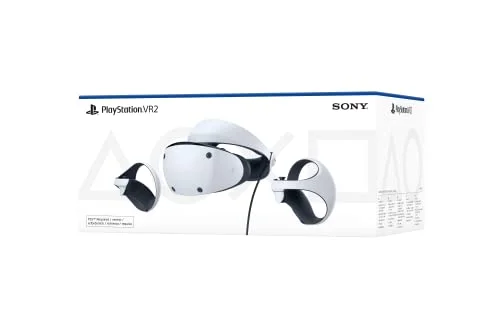
Who is the PlayStation VR2 for?
The PSVR2 is the right headset for one clear group: people who own a PS5 and want the most immersive console VR available. It connects to the console with a single cable and uses the PS5's power, so you get console-grade visuals in VR with a simple, tidy setup. If you already have the console, it is a superb and natural upgrade, with a growing set of polished games designed specifically for it.
It is the wrong headset for anyone without a PS5. Unlike the Meta Quest 3, it cannot run on its own and it will not connect to a PC, so the console is non-negotiable. If you do not have a PS5 and do not plan to buy one, a standalone headset is the better route, and we set out the options in our guide to the best VR headset for PS5.
How the PlayStation VR2 performs
OLED visuals
This is the PSVR2's trump card. It uses genuine OLED panels rather than the LCD screens of the standalone headsets, which means true, deep blacks and proper HDR. In a dark game, the difference is striking: shadows look black rather than grey, and bright highlights pop. At 2000 by 2040 pixels per eye across roughly a 110-degree field of view, it is a wonderfully cinematic image, and the best in this comparison for sheer impact.
Eye tracking and haptics
Two features set the PSVR2 apart. Eye tracking lets games sharpen detail exactly where you are looking, which can improve performance and enable subtle interactions, such as selecting things by glancing at them. And the headset itself has haptics: it can rumble gently in response to the action, so a heartbeat or a nearby explosion is felt as well as heard. Combined with the excellent Sense controllers, these add a layer of presence the standalone headsets do not have.
Games and setup
The library is smaller than Meta's but stronger on showcase titles, with standouts such as Horizon Call of the Mountain, Resident Evil Village in VR and Gran Turismo 7. Setup is refreshingly simple for a tethered headset: a single USB-C cable to the PS5, with no external base stations to mount, so it is far less fuss than a PC VR rig such as the Valve Index.
The honest downsides
The biggest limitation is the obvious one: it does nothing without a PS5. Beyond that, the library, while excellent, is smaller than the Quest ecosystem, so there is less casual and social content to dip into. And because it relies on the console, you cannot take it to a friend's house and play the way you can with a standalone headset. None of these is a flaw in the hardware, which is excellent. They simply define who it is for. If you are weighing it against a standalone option, our standalone versus PC VR guide lays out the trade-offs.