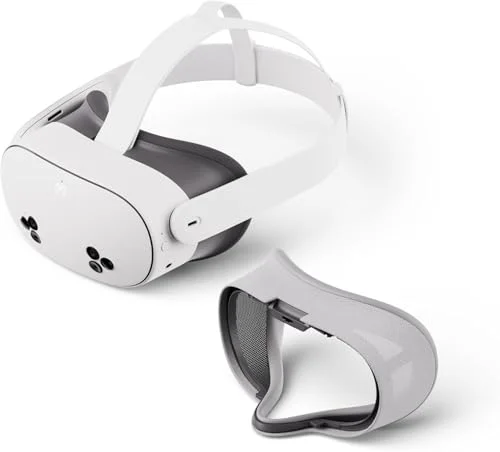
Who is the Meta Quest 3S for?
The Quest 3S is the right headset if you want to get into VR for the least money without ending up with a toy. It is a standalone unit, so there is no PC, no console and no wires to worry about, and it runs the full Meta library, which is the largest in VR. That makes it the obvious choice for a first-time buyer, for a teenager, or as a gift for someone curious about VR who does not want to spend Quest 3 money to find out if they like it.
It is less the headset to buy if you want the sharpest possible image, where the pancake lenses of the Quest 3 are worth the step up, or if you are chasing high-end PC graphics. But for sheer value, getting a newcomer into real VR, nothing else comes close.
How the Meta Quest 3S performs
The same brains as the Quest 3
The crucial point is that Meta did not cripple the Quest 3S where it counts. It uses the same Snapdragon XR2 Gen 2 chip as the Quest 3, so it runs the same games at the same quality, and it has the same full-colour passthrough for mixed reality. Nothing in the library is off-limits, and performance is smooth. In day-to-day play, most people would struggle to tell which headset they were wearing.
The lenses: the one real compromise
To hit the lower price, the Quest 3S uses older Fresnel lenses rather than the Quest 3 pancakes, along with a slightly lower resolution and a marginally narrower field of view. In practice that means a smaller clear sweet spot: the very centre of the image is sharp, but the edges soften a touch sooner than on the Quest 3. It is noticeable if you compare the two side by side, and easy to forget once you are playing. For most buyers it is a fair trade for the saving.
Comfort and everyday use
The Quest 3S is light and comfortable for typical sessions, with the same quick setup as the rest of the range: charge it, draw a boundary, play. Battery life is in the usual two-to-three-hour band for a standalone headset. As with the Quest 3, keen users sometimes add an aftermarket strap for better balance, but it is far from essential.
The honest downsides
The softer lenses are the headline compromise, and whether they matter depends entirely on you. If you are coming fresh to VR, you will simply enjoy the image; if you are upgrading from a Quest 3 you will miss the larger sweet spot. The other usual standalone caveats apply, namely the modest battery life. None of this undermines the core proposition: this is the most game you can get into VR for the money. If the lenses are a sticking point, our buying guide explains exactly what you gain by stepping up to the Quest 3.